


ในหลายบ้าน คำว่า “เร็วหน่อย” และ “บอกกี่ครั้งแล้ว” ดังขึ้นบ่อยที่สุดในช่วงเช้ากับเวลาทำการบ้าน ไม่ใช่เพราะพ่อแม่ใจร้อนเสมอไป และไม่ใช่เพราะเด็กไม่อยากร่วมมือเสมอไป หลายครั้งทั้งสองฝ่ายกำลังติดอยู่กับงานที่มีขั้นตอนมากเกินกว่าที่เด็กจะจัดการได้ในขณะนั้น
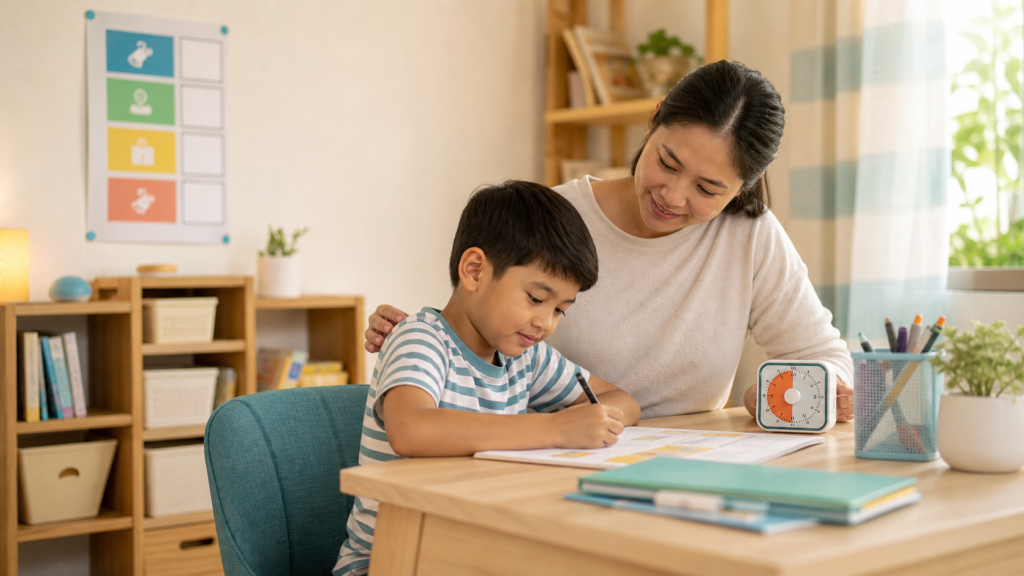
เด็กสมาธิสั้นอาจรู้ว่าควรทำอะไร แต่ติดขัดตอนเริ่ม วางลำดับ กะเวลา หรือดึงตัวเองกลับมาหลังถูกรบกวน การเตือนให้ดังขึ้นจึงไม่ได้ช่วยทุกครั้ง บางบ้านกลับดีขึ้นเมื่อผู้ใหญ่พูดน้อยลง แต่ทำให้ “ขั้นต่อไป” มองเห็นง่ายขึ้น
การปรับสิ่งแวดล้อมไม่ใช่การตามใจ และไม่ได้หมายความว่าจะต้องจัดโลกให้เด็กสบายตลอดเวลา ลองคิดว่าเป็นราวจับบนบันไดค่ะ ราวจับไม่ได้เดินแทนเด็ก แต่ช่วยให้เด็กขึ้นไปถึงชั้นถัดไปได้ปลอดภัยและใช้แรงพอดี แนวทาง NICE และ AAP ต่างให้ความสำคัญกับโครงสร้าง การเสริมแรงเชิงบวก และการร่วมมือระหว่างครอบครัว โรงเรียน และผู้ดูแล
8 วิธีที่ลองปรับได้ โดยไม่ต้องเปลี่ยนทั้งบ้านในวันเดียว
1. เปลี่ยนคำสั่งยาวให้เหลือ “ก้าวถัดไป”
ประโยคอย่าง “อาบน้ำ เก็บโต๊ะ เตรียมกระเป๋า แล้วเข้านอน” มีสี่งานซ่อนอยู่ ลองบอกเฉพาะก้าวแรกว่า “เอาหนังสือสามเล่มใส่กระเป๋าก่อน แล้วมาหาแม่” เมื่อเสร็จค่อยส่งต่อก้าวถัดไป วิธีนี้อาจดูช้าตอนเริ่ม แต่หลายบ้านพบว่ามีเวลาหลงทางและเถียงกันน้อยลง
2. ให้ของสำคัญมีบ้านของมัน
จุดวางกระเป๋า กล่องการบ้าน และตะกร้าสำหรับของที่ต้องนำไปโรงเรียนควรอยู่ที่เดิมและมองเห็นได้ ไม่ต้องสวยหรือซับซ้อน แค่หยิบใช้ง่ายพอจนเด็กทำซ้ำได้ในวันที่เหนื่อย หากระบบต้องให้ผู้ใหญ่คอยอธิบายทุกครั้ง ระบบนั้นอาจยังยากเกินไป
3. ใช้กระดาษช่วยจำ แทนการฝากไว้ในหัว
เช็กลิสต์สั้น ๆ ที่หน้าประตู ตารางภาพในห้องน้ำ หรือโน้ตสามข้อบนโต๊ะ ช่วยย้ายภาระออกจากความจำขณะทำงาน เด็กโตอาจช่วยออกแบบรายการเอง ควรเขียนให้น้อยพอที่จะมองครั้งเดียวแล้วรู้ว่าต้องทำอะไร ไม่ใช่ทำโปสเตอร์ที่เต็มไปด้วยรายละเอียดจนไม่มีใครอ่าน
4. ทำให้เวลาเป็นสิ่งที่มองเห็นได้
คำว่า “อีกเดี๋ยว” ไม่ได้มีความยาวเท่ากันในความรู้สึกของทุกคน ลองใช้นาฬิกานับถอยหลังหรือแจ้งก่อนเปลี่ยนกิจกรรมว่า “เหลืออีก 10 นาที แล้วจะปิดเกมไปอาบน้ำ” จากนั้นเตือนอีกครั้งเมื่อเหลือ 2 นาที การบอกทั้งสิ่งที่กำลังจะจบและสิ่งที่จะเริ่มช่วยลดความตกใจจากการเปลี่ยนกิจกรรม
5. ตัดงานให้สั้นพอที่จะเริ่ม
สำหรับเด็กที่นั่งมองการบ้านครึ่งชั่วโมง คำว่า “ทำให้เสร็จ” อาจใหญ่เกินไป ลองเริ่มจากโจทย์สามข้อหรืออ่านสองหน้า แล้วหยุดเช็กความคืบหน้า เป้าหมายไม่ใช่ทำให้งานทุกชิ้นง่าย แต่คือสร้างจุดเริ่มและเส้นชัยย่อยที่สมองจับต้องได้
6. วางช่วงขยับร่างกายไว้ก่อนหมดความอดทน
การพักไม่จำเป็นต้องเป็นรางวัลหลังทนจนไม่ไหว เด็กบางคนกลับมาจดจ่อได้ดีขึ้นเมื่อได้ยืดตัว เดินไปดื่มน้ำ หรือช่วยยกของสักครู่ กำหนดให้ชัดว่าพักกี่นาทีและจะกลับมาที่งานส่วนไหน เพื่อไม่ให้ช่วงพักกลายเป็นการหายไปทั้งเย็น
7. ชมสิ่งที่เด็กทำได้ให้ทันเวลา
คำชมที่เฉพาะเจาะจงช่วยมากกว่าคำว่า “เก่งมาก” ลองพูดว่า “เมื่อกี้ลูกดูรายการแล้วเริ่มเองได้” หรือ “ลูกกลับมานั่งต่อหลังพัก นี่แหละที่ช่วยให้งานเสร็จ” ไม่ต้องชมทุกอย่าง แต่ให้เด็กได้ยินว่ากลยุทธ์ไหนกำลังได้ผล ก่อนที่บทสนทนาทั้งวันจะเหลือแต่เรื่องที่พลาด
8. เลือกเป้าหมายร่วมกันเพียงหนึ่งหรือสองเรื่อง
บ้านกับโรงเรียนไม่จำเป็นต้องแก้ทุกปัญหาพร้อมกัน อาจเริ่มจาก “จดการบ้านครบ” หรือ “นำงานไปวางที่จุดส่ง” แล้วให้ครูกับผู้ปกครองแลกข้อมูลสั้น ๆ เป้าหมายเล็กที่วัดได้ช่วยให้เห็นว่าแผนกำลังดีขึ้นจริงหรือควรปรับตรงไหน
เริ่มจากจุดที่ทำให้ครอบครัวเหนื่อยที่สุด
ไม่จำเป็นต้องทำครบแปดข้อ เลือกปัญหาหนึ่งเรื่อง ทดลองวิธีใหม่ประมาณหนึ่งถึงสองสัปดาห์ และสังเกตสิ่งง่าย ๆ เช่น ต้องเตือนน้อยลงไหม เด็กเริ่มเร็วขึ้นไหม หรือบรรยากาศตึงเครียดน้อยลงไหม หากไม่ดีขึ้น ให้ปรับระบบ ไม่ใช่สรุปว่าเด็กไม่พยายาม
การปรับบ้านและห้องเรียนเป็นส่วนหนึ่งของการดูแล ไม่ได้แทนการประเมินหรือการรักษาทั้งหมด หากอาการยังรบกวนการเรียน อารมณ์ ความสัมพันธ์ หรือชีวิตประจำวัน ควรปรึกษาผู้เชี่ยวชาญเพื่อวางแผนที่เหมาะกับเด็กแต่ละคนค่ะ
อ่านต่อ
บทความนี้ให้ข้อมูลทั่วไป ไม่ใช้แทนการประเมินหรือคำแนะนำเฉพาะบุคคลจากแพทย์
เขียนโดย พญ.สิริน ปุญญโชติ
Child & Adolescent Psychiatrist
An ADHD-Friendly Home and Classroom: Eight Changes That Help Children Start and Finish Tasks
In many homes, “Hurry up” and “How many times do I have to tell you?” are heard most often in the morning and during homework. This does not always mean a parent is impatient or a child is unwilling. Often, both are stuck inside a task with more steps than the child can manage at that moment.
A child with ADHD may know what to do and still struggle to begin, put steps in order, estimate time, or return after a distraction. Louder reminders do not solve each of those problems. Sometimes family life becomes easier when adults say less and make the next step easier to see.
Environmental support is not giving in or making life easy forever. Think of it as a handrail on a staircase: it does not climb for the child, but it makes the next level safer and more manageable. NICE and AAP guidance both emphasize structure, positive reinforcement, and coordination among families, schools, and healthcare teams.
Eight changes to try—without redesigning the whole house
1. Turn a long instruction into the next step
“Shower, clear the desk, pack your bag, and go to bed” contains four separate jobs. Try giving the first one: “Put these three books in your bag, then come back to me.” It can feel slower at first, but there may be less time lost to confusion and argument.
2. Give important objects a home
School bags, homework, and items that must leave the house need a fixed, visible place. The system does not need to be beautiful. It needs to be easy enough to repeat on a tired day. If an adult must explain it every time, the system may still be too complicated.
3. Put memory on paper
A short checklist by the door, a picture sequence in the bathroom, or three written steps on the desk reduces the load on working memory. Older children can help design their own. Keep it brief enough to understand at a glance.
4. Make time visible
“In a little while” does not feel the same to everyone. Use a visual timer or say, “Ten more minutes, then the game ends and it is time to shower,” followed by a two-minute reminder. Name both what is ending and what comes next.
5. Make the task small enough to begin
For a child staring at homework, “Finish it” may be too large to act on. Begin with three questions or two pages, then pause to check progress. The aim is not to make every task easy; it is to create a starting point and a finish line the brain can see.
6. Plan movement before patience runs out
A break does not have to be a reward for enduring until the last minute. Stretching, getting water, or carrying something for a few minutes may help a child return with better attention. Agree on how long the break lasts and where the work will restart.
7. Notice useful behavior while it is happening
Specific feedback is more informative than “Good job.” Try, “You checked the list and started on your own,” or “You came back after the break—that helped you finish.” Children need to hear which strategies are working before the day becomes a record of mistakes.
8. Share only one or two goals across home and school
Families and teachers do not need to fix everything at once. Start with “write down assignments” or “place completed work in the hand-in tray,” and exchange brief updates. A small, measurable goal shows whether the plan is helping.
Start where family life feels hardest
You do not need to use all eight ideas. Choose one recurring difficulty, try a change for a week or two, and watch for something concrete: fewer reminders, a quicker start, or a calmer evening. If it does not help, revise the system rather than concluding that the child is not trying.
Environmental changes are one part of care, not a replacement for a complete assessment or treatment plan. If difficulties continue to affect learning, emotions, relationships, or daily life, speak with a qualified professional about support tailored to the child.
Related reading
This article provides general information and is not a substitute for individualized medical advice.
Written by Dr. Sirin Poonyachoti
Child & Adolescent Psychiatrist